Category: Mindful Bible Reads

  • The Hidden Treasure and the Pearl

    The Hidden Treasure and the Pearl

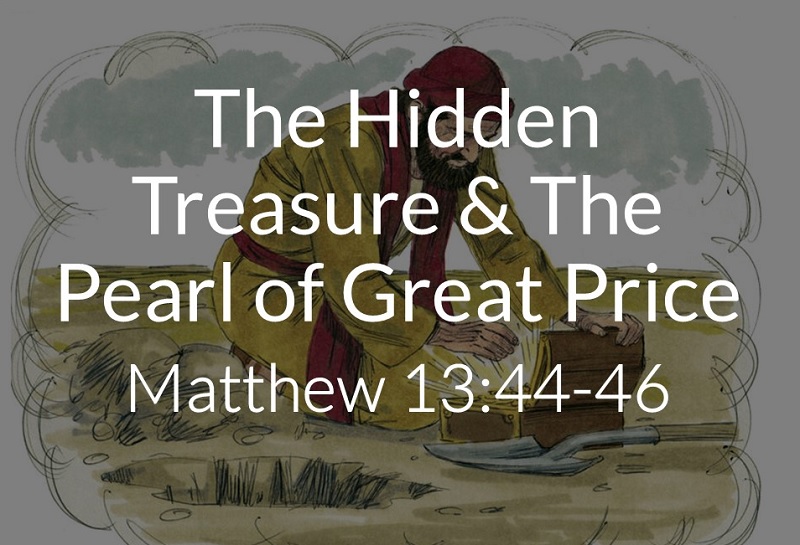
    In Matthew 13:44-46, Jesus told two very short parables about something of extraordinary value: the hidden treasure and the pearl of great price.

    At first glance, they seem to be simple stories about finding something valuable. But Jesus was revealing a much deeper truth: the kingdom of God is worth more than everything this world can offer.

    The question is not simply, “Do I believe in God?”
    The deeper question is: “Do I value God above everything else?”

    What do we value the most?

    1. The Hidden Treasure
    Jesus said: “The kingdom of heaven is like treasure hidden in a field, which a man found and covered up. Then in his joy he goes and sells all that he has and buys that field.” — Matthew 13:44

    Imagine discovering a treasure buried in a field. You suddenly realize that what you have found is worth far more than everything you currently possess.

    What would you do?
    You would not walk away because the price is too high. You would sell what you could because you had discovered something far more valuable.

    Notice something important in Jesus’ story: The man sells everything with joy. He does not act as though he is being robbed. He has discovered something better. His sacrifice makes sense because of the value of what he has found.

    When you truly see the value of Christ, surrender becomes different. Following Jesus may require us to surrender our pride, sinful desires, selfish ambitions, worldly priorities, and sometimes even things we consider extremely important.

    But when we understand what we have gained in Christ, we realize: We are not losing what matters. We are gaining what matters eternally.

    2. The Pearl of Great Price
    Matthew 13:45–46 Jesus says, the kingdom of heaven is like a merchant in search of fine pearls, who, on finding one pearl of great value, went and sold all that he had and bought it.

    The merchant is actively searching for valuable pearls. Then he finds one pearl unlike anything he has seen before. It is so valuable that he sells everything to obtain it.

    When you recognize the supreme value of God’s kingdom, nothing else compares: neither money, success, popularity, comfort, nor possessions. Even the things we consider precious in this life cannot compare with knowing God and belonging to His kingdom.

    3. The World Teaches Us to Value the Wrong Things
    We live in a culture that constantly tells us what is valuable: earthly wealth and temporary things such as success, money, recognition, property, and so on. Jesus asks us to look beyond temporary things, as earthly wealth will disappear, but the kingdom of God has eternal value.

    Jesus asked: “For what will it profit a man if he gains the whole world and forfeits his soul?” — Matthew 16:26

    A person can possess much and still be spiritually poor. A person can have very little and yet possess something infinitely greater: Christ.

    4. Knowing God Is More Valuable Than Having Everything
    The world says: “Get more.” “Build your life around possessions.” “Protect what you have.”
    Jesus says: “Seek first the kingdom of God.” “Do not store up for yourselves treasures on earth.” “Follow me.”

    Christianity is not simply adding Jesus to an already full life. It is recognizing that Jesus is worth making everything else secondary.

    Paul expressed this transformation beautifully: “Whatever gain I had, I counted as loss for the sake of Christ.” — Philippians 3:7.
    Paul had achievements, status, religious credentials, and influence. But after encountering Christ, his entire value system changed. What once seemed important became secondary compared with knowing Christ.

    5. The Treasure Changes Your Priorities
    When you discover something truly valuable, your priorities change. If someone discovered a priceless treasure, they would not continue living as though nothing had happened. The discovery would affect their decisions. In the same way, encountering Christ should change how we live.

    If we say Christ is our greatest treasure but everything else consistently receives our time, attention, energy, and devotion, we should examine our hearts.

    6. Are We Holding On to Things God Is Asking Us to Surrender?
    The man in the parable sold everything. This does not mean that every Christian must literally sell every possession. The deeper issue is the position of our possessions in our hearts.

    What controls us? For some people, it may be money.
    What can we not imagine living without? For others, it may be reputation.
    What would we refuse to surrender to God? For someone else, it may be a relationship, career, comfort, ambition, entertainment, or personal pride.

    Sometimes the greatest obstacle between us and God is not something evil. It may be something good that has become more important than God.

    Jesus does not merely ask: “What do you have?”
    He asks: “What has your heart?”

    7. The Treasure Is Worth the Cost
    Following Christ has a cost. Jesus never promised that discipleship would always be comfortable. There may be sacrifices. There may be rejection. There may be difficult choices. There may be moments when obedience requires us to walk away from something we deeply desire.

    But the parables remind us: The value of what we gain is greater than the cost of what we surrender.

    Think about it this way: If you exchange something worth ₹100 for something worth ₹1,000,000, you have not truly suffered a loss. You have made an exchange that makes sense. The Christian life can look like sacrifice from the outside. But from heaven’s perspective, we are exchanging temporary things for eternal things.

    8. The Danger of Knowing About the Treasure but Not Choosing It
    There is an important difference between knowing something is valuable and acting on that knowledge.

    A person can hear about Jesus, read the bible, attend church or listen to sermons yet still fail to surrender their life to God.

    The man in the field did not simply admire the treasure. He acted. Similarly, the merchant did not merely recognize the pearl’s value. He acted.

    True recognition produces a response. When we understand the worth of Christ, we should not remain unchanged.

    9. What Is Your Greatest Treasure?
    This is perhaps the most important question from these two parables. What is the greatest treasure in your life?

    If someone looked at your calendar, what would they say you value? If they looked at your spending, what would they say you value? If they listened to your conversations, what would they say you value?

    Our priorities often reveal what our hearts truly treasure.

    Jesus said: “For where your treasure is, there your heart will be also.” — Matthew 6:21 We often think our heart determines our treasure. But Jesus also teaches that our treasure reveals our heart.

    10. Christ Is the Treasure worth Everything
    The hidden treasure and the pearl point us toward the incomparable worth of God’s kingdom.

    Christ offers something this world cannot give: Forgiveness that cannot be purchased. Grace that cannot be earned. Peace that circumstances cannot guarantee. A relationship with God. Eternal life. A new identity. A hope that goes beyond the grave.

    May we stop measuring our lives by what we possess and begin measuring them by what we treasure.

    Because the greatest treasure is not something we can store in a bank. The greatest treasure is knowing God and belonging to His kingdom.

    When you discover the worth of Christ, everything else finds its proper place. “Seek first the kingdom of God and his righteousness.” — Matthew 6:33

  • Take the Plank Out First

    Take the Plank Out First

    It is easy to see what is wrong with other people.

    We notice their mistakes, attitudes, words, and weaknesses. Sometimes we become so focused on correcting others that we forget to examine ourselves.

    Jesus addresses this tendency in Matthew 7:3–5 through a simple but powerful picture: a person trying to remove a tiny speck from someone else’s eye while carrying a large plank in their own.

    Look at Yourself First
    Jesus asks: “Why do you look at the speck . . . in your brother’s eye?”
    He is not saying that the speck doesn’t exist. He is challenging our tendency to notice another person’s faults while ignoring our own.

    We often explain away our own mistakes but judge the mistakes of others. When someone else becomes angry, we may call them impatient. When we become angry, we may say, “They provoked me.”

    Jesus wants us to have a different attitude: self-examination. Before asking what needs to change in someone else, we should ask: “Lord, what needs to change in me?”

    The Danger of Hypocrisy
    Hypocrisy happens when we demand from others what we are unwilling to practice ourselves.

    We may tell someone to forgive while holding onto bitterness. We may criticize someone’s anger while refusing to deal with our own. We may speak about humility while constantly comparing ourselves with others.

    Jesus says: “You hypocrite, first take the plank out of your own eye . . .” — Matthew 7:5. He wants our lives to match our words.

    Christianity is not simply about knowing what is right. It is about allowing God to transform us.

    Correction Should Lead to Restoration
    Examine yourself and then help your brother. This means there is a place for loving correction within the Christian life. But correction should come from humility and love, not superiority.

    Galatians 6:1 says: “Restore that person gently.”

    The goal should not be to embarrass someone or prove that we are right. It should be to help them grow. When we remember how much grace we ourselves have received, we can approach others with compassion.

    Before You Judge, Examine
    Before criticizing someone, ask yourself: Have I prayed for them? Have I examined my own heart? Am I trying to restore them, or simply point out their failure?
    These questions can change the way we respond to people.

    Instead of immediately saying, “They need to change,” we can begin by praying, “Lord, change me.” Instead of looking for someone’s failure, we can ask God to give us wisdom, humility, and compassion.

    Matthew 7:3–5 is a call to humility.
    Before you ask, “What’s wrong with them?” ask: “Lord, what are you showing me about myself?” Before you correct, allow God to correct you. Before you point to another person’s weakness, examine your own heart.

    And when God gives you a clearer vision, use it not to condemn others, but to help restore them. “First take the plank out of your own eye, and then you will see clearly to remove the speck from your brother’s eye.” — Matthew 7:5

  • Knowledge without Obedience Produces Pride

    Knowledge without Obedience Produces Pride

    We live in a time when biblical knowledge is more accessible than ever. Thousands of sermons, podcasts, Bible apps, and commentaries are available at our fingertips. Yet knowledge alone does not produce spiritual maturity.

    A person may know Scripture, quote verses, defend doctrine, and even teach others—but if that knowledge is not accompanied by obedience, it often leads to spiritual pride.

    God is not looking for people who merely know His Word. He is looking for people who live His Word. According to James 1:22, “But be doers of the word, and not hearers only, deceiving yourselves.”

    Facts relating to knowledge without action?

    Knowledge Alone Can Produce Pride
    1 Corinthians 8:1 says, “Knowledge puffs up, but love edifies.” Knowledge has the potential to inflate our ego. Instead of becoming more like Christ, we begin comparing ourselves with others.

    The Pharisees knew the Scriptures better than anyone. Yet they rejected the very Messiah whom the Scriptures revealed. E.g.: Like a balloon filled with air . . . The bigger it becomes, the lighter it is. Knowledge without obedience fills the head but leaves the heart empty.

    The Pharisees Knew Scripture but Refused to Obey
    Jesus said: “These people honor Me with their lips, but their heart is far from Me.”
    The Pharisees taught the Law, fasted regularly and prayed publicly. But they lacked mercy, humility, repentance, and love. They possessed information but not transformation.

    Obedience Demonstrates Genuine Love
    John 14:15 says, “If you love Me, keep My commandments.” Jesus never said: “If you know Me…” He said: “If you love Me . . . . . .” Love is measured by obedience.
    A child who hears a parent’s instruction but refuses to obey cannot claim to be obedient simply because they understood the instruction. The same is true spiritually.

    Hearing without Doing Is Self-Deception
    In James 1:22–25 he compares a hearer of the Word to someone looking in a mirror. He sees his condition, walks away, and immediately forgets. But the obedient believer hears, repents, and changes. God blesses obedience—not merely information.

    Even Demons Have Knowledge
    James 2:19 “You believe that there is one God. You do well. Even the demons believe—and tremble!” Demons possess correct theology. They know Jesus is the Son of God. God is holy and judgment is coming. Yet they never obey. Knowledge alone does not save. Faith that obeys does.

    Pride Comes Before Destruction
    Proverbs 16:18 “Pride goes before destruction, and a haughty spirit before a fall.”
    When knowledge produces pride: prayer decreases, repentance disappears, correction is resisted, compassion fades, and humility is lost. Pride is often the first step toward spiritual decline.

    Jesus Commended Those Who Obey
    Luke 11:28 “Blessed are those who hear the word of God and keep it!” The blessing is not upon the hearer. The blessing is upon the doer.

    Jesus Is Our Perfect Example
    Jesus possessed all wisdom. Yet He remained humble. Philippians 2:8 says, “He humbled Himself and became obedient to the point of death, even the death of the cross.” Christ demonstrated that true greatness is found not merely in knowing God’s will, but in obeying it completely.

    Knowledge is a gift from God, but it reaches its purpose only when it leads to obedience. Knowledge without obedience often breeds pride; knowledge joined with humility and obedience produces a Christlike character.

    As Jesus taught: “If you know these things, blessed are you if you do them.” (John 13:17)

    May we seek not only to fill our minds with God’s truth, but to let that truth shape our hearts, transform our lives, and glorify Christ through faithful obedience.

  • SELF-RIGHTEOUS CHRISTIANITY

    SELF-RIGHTEOUS CHRISTIANITY

    Main Ref: Luke 18:9–14
    Christianity is not about proving that we are better than others; it is about becoming more like Christ. “When being right becomes more important than being like Christ.”

    Luke 18:9 introduces the Parable of the Pharisee and the Tax Collector, which Jesus told to people who trusted in their own righteousness and despised others.

    CAN A CHRISTIAN BECOME SELF-RIGHTEOUS?
    When we hear the word self-righteous, we usually think about someone who is proud, judgmental, and religious. But Jesus gives us a surprising example of a Pharisee and a tax collector in Luke 18, where two men go to the temple to pray.

    The Pharisee proudly thanks God for his moral conduct and religious practices like fasting and tithing. In contrast, the tax collector stands at a distance, humbly beats his breast, and asks God for mercy as a sinner. Here, the Pharisee trusted in himself, but the tax collector trusted in God’s mercy.

    As self-righteous Christians, we can do religious things while becoming spiritually proud. We can know the Bible but not know humility. We can attend church but look down on people. We can serve God but secretly worship ourselves.

    WHAT IS SELF-RIGHTEOUSNESS?
    Self-righteousness is trusting in our own goodness and religious performance instead of depending on God’s grace.

    Look at the Pharisee’s prayer in Luke 18:11, 12: “God, I thank you that I am not like other men . . .” “I am not like them.” “I fast twice a week; I give tithes of all that I get.”

    There is nothing inherently wrong with fasting or giving. But the Pharisee prays proudly in the temple, thanking God that he is morally superior to others and listing his strict religious habits.

    Self-righteousness says: “Look at what I have done” and “I am not like them.” Whereas humility says: “I am not like them” and “Without Jesus, I am nothing.”

    SELF-RIGHTEOUSNESS ALWAYS COMPARES
    The Pharisee needed someone to compare himself with. He looked at the tax collector and thought: “At least I’m not like him.” Sometimes our Christianity becomes a comparison game. “I pray more than him.” “I know more about the Bible than her.” “I have been a Christian longer.” “I serve in ministry.”
    And slowly we stop asking, “Am I becoming like Jesus?” and start asking, “Am I better than them?”

    In Galatians 6:4, Paul says, “Let each one test his own work…” The Christian life is not a competition. We don’t measure ourselves against another Christian. We look at Christ.

    Eg: Imagine two people standing in front of a mirror. One looks at himself and says, “I need to change.” The other looks in a mirror and says, “Look how dirty everyone else is.” That’s what self-righteousness does. It makes us experts at seeing other people’s problems while becoming blind to our own.

    Jesus said: “Why do you see the speck that is in your brother’s eye, but do not notice the log that is in your own eye?” — Matthew 7:3. Jesus isn’t saying we should ignore sin. He is saying: Deal with your own heart first.

    SELF-RIGHTEOUSNESS FORGETS GRACE
    The tax collector stood far away. He wouldn’t even lift his eyes towards heaven. He simply prayed: “God, be merciful to me, a sinner!” — Luke 18:13.

    The Pharisee says: “Look what I’ve done,” and presents his achievements.
    The tax collector says: “Lord, I need mercy,” and presents his brokenness.

    Why did Jesus say the tax collector went home justified?
    Because salvation has never been something we earn by becoming impressive enough for God.
    “For all have sinned and fall short of the glory of God.” — Romans 3:23 and: “For by grace you have been saved through faith… it is the gift of God.” — Ephesians 2:8

    TRUTH WITHOUT LOVE CAN BECOME SELF-RIGHTEOUSNESS
    Humility does not mean saying sin doesn’t matter. Grace does not mean abandoning truth. Jesus never compromised God’s truth. There is an important balance here. Jesus never compromised God’s truth. But he also never used truth as an excuse to treat broken people without compassion. Galatians 6:1 says: “…restore him in a spirit of gentleness.” This means not to destroy or celebrate someone’s failure.

    Eg: Imagine someone falling into a ditch. One person stands above them and says: “How foolish you are!” Another person reaches down and says: “Give me your hand.” Both see the problem. But only one is trying to restore the person. That’s what Christian correction should look like. Truth tells us where the problem is. Love helps us walk out of it.

    RELIGIOUS PERFORMANCE IS NOT THE SAME AS SPIRITUAL TRANSFORMATION
    Religious performances like teaching, fasting, attending church, serving, or reading scripture would not be considered as spiritual transformation if we have pride, bitterness, greed, jealousy, anger, and unforgivingness.

    Jesus warned about people who looked religious on the outside while their hearts were far from God: “These people honor me with their lips, but their hearts are far from me.” — Matthew 15:8

    So we need to ask ourselves:
    Is my Christianity changing my heart? “Am I becoming more loving?”
    “How much of the Bible do I know?” “Am I obeying what I know?”
    “How much do I serve?” “Do I serve with humility?”

    WHAT SHOULD REPLACE SELF-RIGHTEOUSNESS?
    1. Replace comparison with compassion.
    Instead of asking “Why are they like that?” ask “How can I help them?”
    2. Replace condemnation with restoration.
    Instead of enjoying someone’s failure: Pray for their restoration.
    3. Replace pride with gratitude.
    Instead of saying, “Look how good I am,” say: “Thank You, Jesus, for Your grace.”
    4. Replace judgment with self-examination.
    Before asking: “What’s wrong with them?” he asked: “Lord, what’s wrong with me?”
    David prayed: “Search for me, O God, and know my heart . . .” — Psalm 139:23. That is a dangerous prayer for a proud heart—but a beautiful prayer for a disciple.

    THE CROSS — THE CURE FOR SELF-RIGHTEOUSNESS
    The cross destroys our boasting. Why? Because the cross tells us: I could not save myself. Jesus had to save me. Ephesians 2:8–9 says salvation is: “the gift of God… not a result of works, so that no one may boast.” When we remember the cross, we cannot stand before another sinner and say: “I’m better than you.” We can only say: “I am saved by grace.” The ground is level at the cross. We don’t come to Jesus because we were good enough. We come because He is good.

    The goal of Christianity is not: “Look how righteous I am.”
    The goal is: “Look what Jesus has done to me.”
    When someone falls, don’t celebrate, rather ‘pray’ for them.
    When someone sins, don’t forget your own need for grace rather than ‘restore’

    And every morning, remember: “God, be merciful to me, a sinner.” Because the closer we come to the cross, the less we boast about ourselves, and the more we thank Jesus for His grace.