Category: Mindful Bible Reads

  • You Cannot Serve Both God and Money

    You Cannot Serve Both God and Money

    We live in a world where success is often measured by wealth, possessions, and financial status. Everywhere we look, we are encouraged to earn more, buy more, and accumulate more. Money has become more than a tool—it has become a master for many.

    Yet Jesus makes a powerful and uncompromising statement: “No one can serve two masters… You cannot serve both God and money.” (Matthew 6:24)

    This is not merely a warning about wealth. It is a question about lordship. Who is truly ruling your heart?

    Money Is a Good Servant but a Terrible Master
    The Bible never teaches that money itself is evil. Money can provide for families, support ministries, feed the poor, and advance God’s kingdom. The problem begins when money moves from our hands into our hearts.

    What happens when money becomes our master: Decisions are driven by profit instead of principle. Relationships become less important than success. Time with God is sacrificed for career advancement. Generosity is replaced by greed. Security is found in bank accounts instead of God’s promises.

    Jesus knew that the greatest competitor for human devotion would not be another religion—it would often be wealth.

    Let’s see how two masters demand total loyalty.
    Jesus says no one can serve two masters because each master demands complete allegiance.

    When we serve God, we seek His kingdom first. We trust Him for our daily needs. We value people over possessions. We pursue righteousness instead of riches. We use money as a tool to glorify God.

    Serving God produce: Peace, Contentment, Generosity, Integrity and Eternal rewards

    When we serve money, money becomes our master. We constantly worry about having enough. Success becomes our identity. We compromise biblical values for financial gain. We compare ourselves with others. We never feel satisfied because there is always more to chase.

    Serving money produce: Anxiety, Greed, Pride, Envy, and Spiritual emptiness

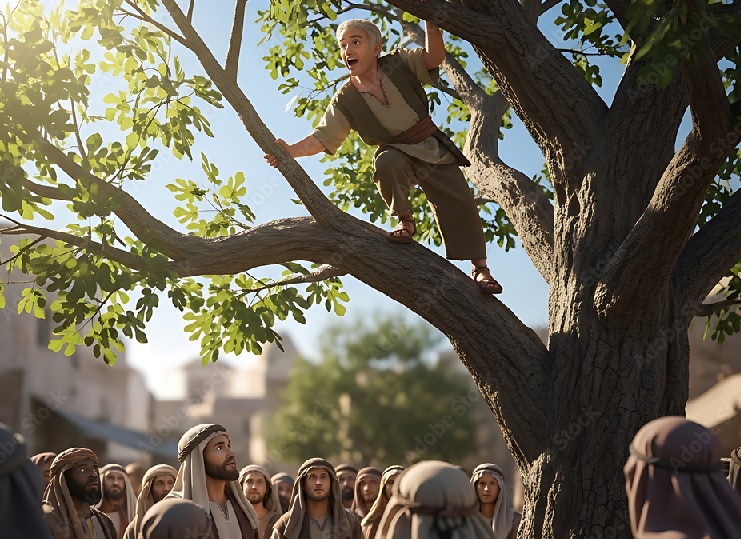
    In Luke 18 and 19 chapters we see contrasting the rich young ruler and Zacchaeus highlights two opposite responses to Jesus regarding wealth and surrender

    Rich Young Ruler Relies on his own good deeds. Refuses to give up his great wealth when Jesus asks him to, walking away sad but Zacchaeus humbled himself by climbing a tree to see Jesus. He voluntarily gives half his money to the poor and pays back four times what he stole.

    We should find out where our treasure is. As Jesus said, “For where your treasure is, there your heart will be also.” (Matthew 6:21)
    Ask yourself: What consumes my thoughts? What am I unwilling to surrender? What gives me my sense of security? These questions expose the true master of our hearts.

    Practical ways to keep God first: Begin every financial decision with prayer. Practice generosity regularly. Live with contentment rather than constant comparison. Remember that everything belongs to God. Invest not only in earthly wealth but also in eternal treasures.

    Money promises happiness but cannot satisfy the soul. Money promises security but cannot guarantee tomorrow. Money promises importance but cannot purchase eternal life. Only Jesus offers forgiveness, peace, purpose, and eternal hope.

    Here, the question is, “Do you have money?”, or “Does money have you?”
    God is not asking us to hate money. He is asking us not to worship it. Money should remain a servant in our hands—not a master over our hearts.

    Every day we choose whom we will serve. One master leads to endless striving. The other leads to abundant life. May we echo the words of Joshua: “As for me and my house, we will serve the Lord.” (Joshua 24:15). Because when God is your Master, money becomes your servant—and your heart discovers a treasure that neither moth nor rust can destroy.

  • Profane Talking and Old Wives fables

    Profane Talking and Old Wives fables

    Profane talking means treating sacred things without respect through behaviour or rude language. Sometimes, profane talking might become very dangerous because a small spark can burn an entire forest—so can one careless word destroy peace?

    What are the effects of profane talking?
    Words reveal the heart (Luke 6:45)
    Words can destroy lives and relationships.
    Words grieve the Holy Spirit

    According to Ephesians 4:29 — “Let no corrupt communication proceed out of your mouth…”

    Old wives’ tales: Old wives’ tales are superstitious beliefs such as blind belief in luck, omens, or rituals; viral misinformation presented as “truth” and feel-good teachings without a biblical foundation.

    What are the effects of old wives’ tales?
    We get distracted from the truth
    We create fear or confusion
    We replace faith with superstition

    According to 1st Timothy 4:7 — “Have nothing to do with godless myths and old wives’ tales…”

    How do we overcome old wives’ fables and profane talking?
    Speak words that build, not break. Think before speaking: Is it true? Is it helpful? Is it godly? Test everything with Scripture and stay rooted in truth, not trends.

    1 Timothy 4:7–8 — describes “…train yourself to be godly.”
    You cannot speak godly words if your mind is filled with ungodly input. James 3:5–6 — emphasizes the tongue is small but powerful.

    Spiritual discipline for profane talking and old wives’ fables includes:
    Controlling your speech
    Filling your mind with truth
    Pursuing truth and godliness

    After transformation, what is the power of the tongue?
    Your speech becomes life-giving, your words reflect Christ, and your influence becomes positive.

  • The Greatest in the Kingdom of Heaven

    The Greatest in the Kingdom of Heaven

    In the Kingdom of Heaven, greatness is defined by humility, service, and childlike trust rather than status or power. Jesus taught that whoever humbles themselves like a child and is willing to serve others is considered the greatest in the kingdom.

    Ticket to Paradise
    “Ticket to paradise” (heaven) is not earned through good works or religious rituals. Instead, it is a free gift from God, purchased by Jesus Christ’s death on the cross and received through faith.

    Everybody aspires to enter paradise. Heaven is what everyone aspires to. Everyone wants to live forever. Most people believe they already have the correct ticket. “I attend church.” “I am blessed.” “I’ve accomplished something in my life.”

    According to Matthew 18:1 the disciples had a query: “In God’s kingdom, who is the greatest?” In order to comprehend heaven’s kingdom, they were constantly considering rank, status, and recognition in an earthly manner, which was completely incorrect. Many people still assess importance by publicity, greatness by wealth, and success by followers.

    It is important for us to realise that heaven functions differently from earth.

    In Matthew 18:2-5, Jesus called a little child to come to him. He stood the child in front of the followers. Then he said, “The truth is, you must change your thinking and become like little children. If you don’t do this, you will never enter God’s kingdom. The greatest person in God’s kingdom is the one who makes himself humble like this child. Whoever accepts a little child like this in my name is accepting me.

    What are the changes required to enter the kingdom of God?

    1. You cannot carry pride, self-importance, and ego into the kingdom of God.
    Jesus says unless you change yourselves — turn around, reverse direction, and abandon your current mindset — you cannot enter the kingdom of God.

    2. You should be like a child: Jesus is not telling us to be childish. He is calling us to be:
    Humble: A child doesn’t fight for position.
    Dependent: A child knows they cannot survive on their own.
    Trusting: A child believes without resistance.
    Teachable: A child is open and willing to learn.
    A child doesn’t bring achievements—they come empty-handed.

    3. According to Jesus, “Whoever takes the lowly position of this child is the greatest…”
    The last turns into the first. The low turns into a great. The lowly are raised.
    “Climb higher,” the world says. “Come lower,” declares Jesus. “Promote yourself,” the world says. “Deny yourself,” declares Jesus.

    4. Jesus says “Whoever welcomes one such child in my name welcomes me.” This is powerful.
    When you love the unnoticed → you love Christ.
    When you serve the weak → you serve Christ.
    When you accept the rejected → you accept Christ.
    Your humility is not just vertical (towards God)… It is also horizontal (towards people).

    5. Today, many are holding what they think is a ticket: Religion, good works, wealth and influence. But these are not valid at heaven’s gate. You cannot buy this ticket, nor can you earn this ticket.

    6. The only ticket to paradise is: A humble, childlike heart that says “God, I need You.” “I trust You.” And “I surrender everything to You.”

    “Heaven is not entered by those who rise above others… but by those who are willing to come low before God.”

  • “Two Rich Men. Two Responses. One Saviour.”

    “Two Rich Men. Two Responses. One Saviour.”

    1. The rich man and his response
    Mark 10:17–22 recounts Jesus’ famous encounter with the rich, young man who asks how to inherit eternal life. Jesus lists the commandments: ‘You must not murder anyone, you must not commit adultery, you must not steal, you must not lie, you must not cheat, you must respect your father and mother,’ which the man claims to have kept since youth. Out of love, Jesus tells him to sell his possessions, give to the poor, and follow Him. The man leaves sorrowfully, unwilling to part with his wealth.

    The rich young ruler wanted salvation without surrender. He exposed his idol as wealth. Due to delayed obedience, he walked away from Jesus.

    True love requires surrendering anything that takes priority over God. He shows that love is not merely following rules, but a wholehearted commitment that demands letting go of worldly attachments to sacrificially care for others.

    2. The rich man Zacchaeus and his response
    Luke 19:1–10 emphasizes that Jesus was going through the city of Jericho. In Jericho, there was a man named Zacchaeus. He was a wealthy, very important tax collector. He wanted to see who Jesus was. There were many others who wanted to see Jesus too. Zacchaeus was too short to see above the people. So, he ran to a place where he knew Jesus would come. Then he climbed a sycamore tree so he could see Him. When Jesus came to where Zacchaeus was, He looked up and saw him in the tree. Jesus said, “Zacchaeus, hurry! Come down! I must stay at your house today.” Zacchaeus hurried and came down. He was happy to have Jesus in his house. Everyone saw this. They began to complain, “Look at the kind of man Jesus is staying with. Zacchaeus is a sinner!” Zacchaeus said to the Lord, “I want to do good. I will give half of my money to the poor. If I have cheated anyone, I will pay them back four times more.” Jesus said, “Today is the day for this family to be saved from sin. Yes, even this tax collector is one of God’s chosen people. The Son of Man* came to find lost people and save them.”

    Zacchaeus positions himself to encounter Jesus at any cost. Yet, he voluntarily surrenders everything and welcomes Jesus into his life.

    No one is beyond redemption, and Christ’s mission is actively to seek out and save the lost.