Category: Mindful Bible Reads

  • Experiencing illness

    Experiencing illness

    Sickness is a condition that affects the physical, emotional, and spiritual well-being of individuals. According to Hebrews 12:5-11, illness is permitted as a means of correcting or refining believers, drawing them closer to God.

    Isaiah 41:10 says
    “So do not fear, for I am with you; do not be dismayed, for I am your God. I will strengthen you and help you; I will uphold you with my righteous right hand.” God promises to offer comfort to those who seek Him.

    Psalm 23 describes that the Lord is my shepherd. I will always have everything I need. He gives me green pastures to lie in. He leads me by calm pools of water. He restores my strength. He leads me on the right path to show that He is good. Even if I walk through a valley as dark as the grave, I will not be afraid of any danger, because you are with me. Your rod and staff comfort me. You have prepared a meal for me in front of my enemies. You have welcomed me as an honored guest. My cup is full and spilling over. Your goodness and mercy will be with me all my life and I will live in the Lord’s house a long, long time. So, under divine care, one will never truly lack what is needed and will experience enduring goodness, spiritual protection, and eternal life in God’s presence.

    According to Deuteronomy 31:6, “Be strong and courageous, for the Lord your God goes with you; He will never leave you nor forsake you.” Psalm 41:3 says, “The LORD sustains them on their sickbed and restores them from their bed of illness.”

  • Wise women and foolish women

    Wise women and foolish women

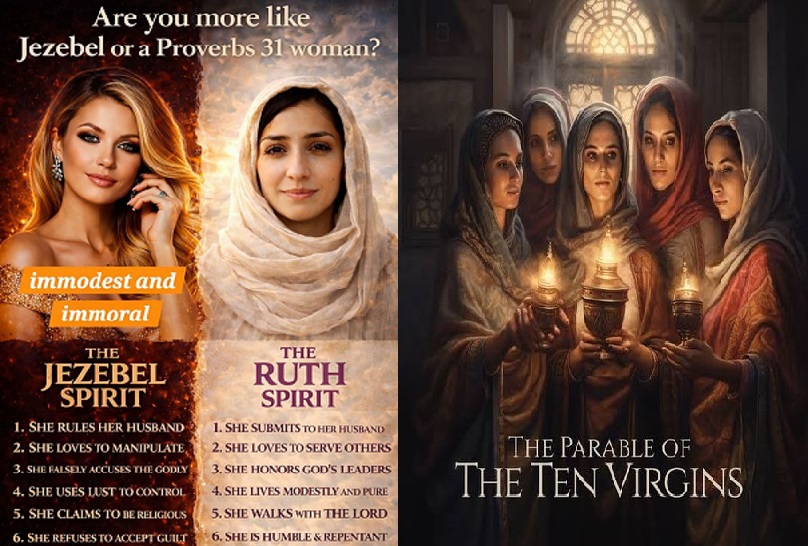
    A wise woman is defined not by intellectual cleverness, but by her foundational “fear of the Lord,” which translates into godly character, skillful stewardship, and active, constructive influence over her home and community. Proverbs 14:1 says the wise woman builds her house, but with her own hands the foolish one tears hers down.

    Matthew 25:1-13 presents the Parable of the Ten Virgins, which teaches readiness for Christ’s return. “At that time, God’s kingdom will be like ten girls who went to wait for the bridegroom. They took their lamps with them. Five of the girls were foolish, and five were wise. The foolish girls took their lamps with them, but they did not take extra oil for the lamps. The wise girls took their lamps and more oil in jars. When the bridegroom was very late, the girls could not keep their eyes open, and they all fell asleep. “At midnight, someone announced, ‘the bridegroom is coming! Come and meet him!’ “Then all the girls woke up. They made their lamps ready. But the foolish girls said to the wise girls, ‘Give us some of your oil. The oil in our lamps is all gone.’ “The wise girls answered, ‘No! The oil we have might not be enough for all of us. But go to those who sell oil and buy some for yourselves.’ “So the foolish girls went to buy oil. While they were gone, the bridegroom came. The ready girls went in with the bridegroom to the wedding feast. Then the door was closed and locked. “Later, the other girls came. They said, ‘Sir, sir! Open the door to let us in.’ “But the bridegroom answered, ‘Certainly not! I don’t even know you.’ “So always be ready. You don’t know the day or the time when the Son of Man will come.”

    Wise Women: Ruth is a Moabite woman who marries a Judean immigrant named Mahlon. Upon his death, she becomes a childless widow who chooses to accompany her mother-in-law, Naomi, to Judah, instead of remaining with her own people. Ruth then became the wife of Boaz, a wealthy kinsman of her former husband, and bore Obed.

    Foolish Women: Jezebel, a Phoenician princess who married King Ahab of Israel, is a notorious biblical figure known for promoting Baal worship, persecuting Yahweh’s prophets (especially Elijah), and orchestrating the murder of Naboth for his vineyard, leading to her own violent death as prophesied. She is a symbol of wickedness, idolatry, and a powerful, manipulative woman.

    Difference between Wise Women and Foolish Women
    The wise woman honours, but the foolish woman humiliates. The wise woman creates peace, but the foolish woman creates war. The wise woman speaks life, but a foolish woman’s tongue is a weapon. The wise woman can admit she’s wrong, but for a foolish woman, pride is more important than her home. The wise woman protects her marriage from gossip and strangers, but a foolish woman lets outsiders run her home.

    According to Proverbs 31:26-27:
    “A wise woman opens her mouth with wisdom, and the teaching of kindness is on her tongue. She looks well to the ways of her household, and does not eat the bread of idleness.”

  • Seeking forgiveness

    Seeking forgiveness

    Seeking forgiveness involves true repentance—a heartfelt acknowledgement of sin to God, a sincere desire to turn away from it, and a request for forgiveness in Jesus’ name. Proverbs 28:13 says that whoever hides their sins will not be successful, but whoever confesses their sins and stops doing wrong will receive mercy.

    Psalms 32:1-5 states that when people are forgiven for their wrongdoing and sins, it is a great blessing. When the Lord declares them not guilty, and they don’t conceal their sins, it is a great blessing. I prayed to you again and again, but I did not speak of my sins. So I only became weaker and more miserable. Every day, you made life harder for me. I became like a dry land in the hot summertime. But then I decided to confess my sins to the Lord. I stopped hiding my guilt and told you about my sins, and you forgave them all!

    1 John 1:5-10: Have you heard the true teaching that God is light, and in Him there is no darkness? So if we say that we share our life with God, but we continue living in darkness, we are liars who don’t follow the truth. We should live in the light, where God is. If we live in the light, we have fellowship with each other, and the blood sacrifice of Jesus, God’s Son, washes away every sin and makes us clean. If we say that we have no sin, we are fooling ourselves, and the truth is not in us. But if we confess our sins, God will forgive us. We can trust God to do this. He always does what is right. He will make us clean from all the wrong things we have done. If we say that we have not sinned, we are saying that God is a liar and that we don’t accept his true teaching.

  • Caring for the Aged

    Caring for the Aged

    Nature herself teaches us that age demands dignity and honour. The older the redwoods, the more majestic they are. The older wines and cheeses are, the more they are praised and honoured for their taste. Shouldn’t it hold that the older a man is, the more he is to be appreciated by others?

    I am convinced that young people are missing one of the greatest opportunities available when they do not get to know the elderly and associate with them. All too soon, these towering pillars of faith and wisdom will pass from our midst, and the loss will be tremendous.

    Proverbs 23:22 tell us “Listen to your father. Without him, you would never have been born. Respect your mother, even when she is old”. In Isaiah 46:4, we study “I will be your God throughout your lifetime, until your hair is white with age. I made you, and I will care for you.

    Genesis 47:1-12 describes Joseph’s family officially settling in Egypt’s fertile land of Goshen due to the famine. Pharaoh granted them land and status as shepherds in charge of livestock. This marked a pivotal moment where the Israelites moved from Canaan to Egypt under Joseph’s powerful management, culminating in Jacob blessing Pharaoh and settling in the best part of Egypt, securing provision and a future for his family.

    1 Timothy 5:17-19: Let the elders who rule well be considered worthy of double honour, especially those who labour in preaching and teaching.